
An overview
Pre-anaesthetic medication is often included in anaesthetic protocols for larger species. The advantages of this are:
- Administering sedatives or tranquillisers can reduce aggression and fear or apprehension and aid stress-free induction of anaesthesia.
- Use of analgesics can reduce pain, especially in the immediate post-operative period, and may provide more effective pain relief through ‘pre-emptive analgesia’.
- Atropine or glycopyrrolate can be given to reduce bronchial and salivary secretions and to protect the heart from vagal inhibition caused by some procedures (e.g. endotracheal intubation, manipulation of the viscera during surgery). It is advisable to use glycopyrrolate in rabbits, as atropine is often relatively ineffective in this species.
- Use of sedatives, tranquillisers and analgesics can reduce the amount of anaesthetic needed to produce the desired level of anaesthesia. These agents also provide smoother induction of anaesthesia and a smoother recovery.
Although the advantages listed above apply to all animal species, pre-anaesthetic medication is used most often in larger animals, where sedation and tranquillisation are required to aid humane restraint and minimize the risk of injury to the animal and its handler. Pre-anaesthetic medication should be used in a wider range of species, since even when restraint is not a problem, the use of sedatives and tranquillisers may be advantageous. In humans, many of the drugs used have been shown to reduce fear and allay anxiety, and similar effects occur in animals. In addition to the use of drugs, careful and expert handling of laboratory animals is an essential part of their management before and after anaesthesia.
Consideration of the techniques used and their possible stressful effects upon the animal should enable modification of anaesthetic protocols to minimize pain or distress. For example, administration of a sedative/analgesic to an animal still housed in its pen or cage, followed by removal to the operating theatre or research laboratory only after the drug has taken effect, can considerably reduce the stress that might otherwise be caused.
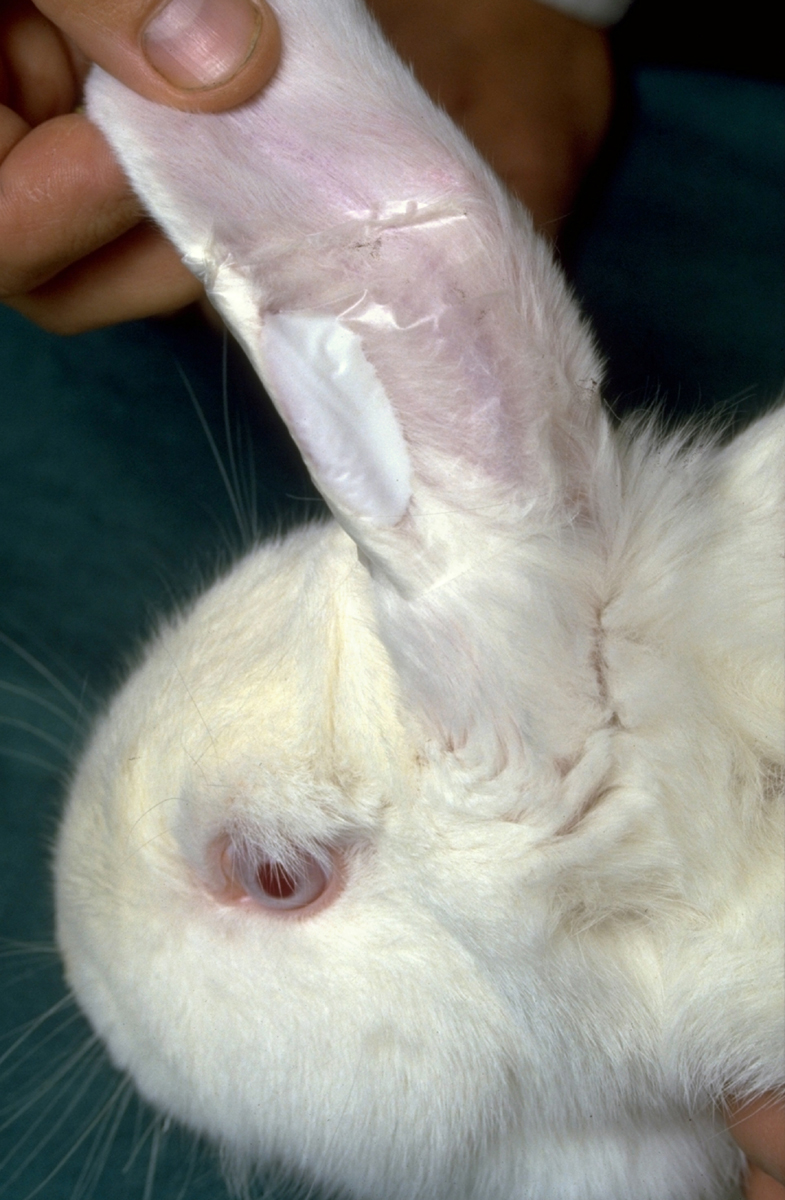
If an intravenous induction agent is to be used, then a local anaesthetic cream (e.g. EMLA, Astra) can be applied to the skin overlying the vein, about 30–45 minutes before intravenous injection. This eliminates the pain or discomfort of venepuncture and has the added advantage of eliminating any movement in response to the procedure since the skin is completely anaesthetised.
The selection of a pre-anaesthetic drug regime will depend on the animal species to be anaesthetised; the anaesthetic agents to be used; the particular requirements of the research protocol; and the personal preferences of the anaesthetist. The characteristics of the most commonly used anaesthetic and other agents used in small laboratory animals are listed in the table below.
Pre-anaesthetic agents for use in small laboratory animals
The effects vary depending upon the species and dose rate used. Effects can also vary with different strains of rodent and between individual animals.
Table: Characteristics of the most commonly used anaesthetic and other agents used in small laboratory animals| Drug | Species | Dose rate | Effects |
|---|---|---|---|
| Acepromazine | Rat | 2.5mg/kg i/p or s/c | Sedation, but still active, no specific analgesic effects, but potentiates the effects of anaesthetics |
| Acepromazine | Mouse, Hamster, Gerbil | 3-5mg/kg i/p or s/c | Sedation, but still active, no specific analgesic effects, but potentiates the effects of anaesthetics |
| Acepromazine | Rabbit and Guinea Pig | 0.5-1mg/kg s/c or i/m | Sedated – often immobilised, no specific analgesic effects, but potentiates the effects of anaesthetics |
| Acepromazine + Butorphanol | Rabbit | 0.5 mg/kg + 0.5 mg/kg im | Sedation, often immobilised, some analgesia due to the effects of butorphanol |
| Atropine | Mouse, Hamster, Gerbil, Rat, Guinea Pig | 40 micrograms/kg s/c | Reduced bronchial and salivary secretions, inhibits vagal responses, ineffective in many rabbits |
| Diazepam | Mouse, Hamster, Gerbil | 5mg/kg i/p | Sedation, no specific analgesic effects, but potentiates the effects of anaesthetics |
| Diazepam | Guinea Pig | 2.5mg/kg i/p or s/c | Sedation, no specific analgesic effects, but potentiates the effects of anaesthetics |
| Diazepam | Rat | 2.5mg/kg i/p | Sedation, no specific analgesic effects, but potentiates the effects of anaesthetics |
| Diazepam | Rabbit | 1-2mg/kg i/m | Sedation, no specific analgesic effects, but potentiates the effects of anaesthetics |
| Glycopyrrolate | Rabbit | 0.01 mg/kg iv, 0.1 mg/kg im sc | Reduced bronchial and salivary secretions, inhibits vagal responses |
| Hypnorm (fentanyl/fluanisone) | Mouse, Hamster, Gerbil, Rat, Guinea Pig | 0.5ml/kg s/c or i/p | Sedation and analgesia – often sufficiently immobilised and with sufficient analgesia for minor surgical procedures |
| Hypnorm (fentanyl/fluanisone) | Rabbit | 0.3-0.5ml/kg s/c or i/m | Sedation and analgesia – often sufficiently immobilised and with sufficient analgesia for minor surgical procedures |
| Medetomidine (and Dexmedetomidine – at 50% of the dose rates given here) | Mouse, Hamster, Rat | 30-100 micrograms/kg s/c or i/p | Sedation and some analgesia, immobilised at higher dose rates |
| Medetomidine (and Dexmedetomidine – at 50% of the dose rates given here) | Guinea pig | 500 micrograms s/c or i/p | Sedation and some analgesia, immobilised at higher dose rates |
| Medetomidine (and Dexmedetomidine – at 50% of the dose rates given here) | Rabbit | 100-500 micrograms s/c or i/p | Sedation and some analgesia, immobilised at higher dose rates |
| Midazolam | Mouse, Hamster, Gerbil, Guinea Pig | 5mg/kg i/p | Sedation, no specific analgesic effects, but potentiates the effects of anaesthetics |
| Midazolam | Rat | 2.5mg/kg i/p | Sedation, no specific analgesic effects, but potentiates the effects of anaesthetics |
| Midazolam | Rabbit | 1-2mg/kg i/m | Sedation, no specific analgesic effects, but potentiates the effects of anaesthetics |
| Xylazine | Mouse, Hamster, Rat | 5mg/kg s/c or i/m | Sedation and some analgesia, immobilised at higher dose rates |
| Xylazine | Rabbit | 2.5mg/kg s/c or i/m | Sedation and some analgesia, immobilised at higher dose rates |
Species specific factors
Small rodents
Since anaesthetic induction is usually achieved using either volatile anaesthetics, administered in an anaesthetic chamber, or intraperitoneal or subcutaneous injection of an anaesthetic agent (or mixture of agents), pre-anaesthetic agents are rarely used.
When only immobilisation is required, rather than anaesthesia, high doses of some of the agents in the tables below may be effective, but often low doses of anaesthetic combinations (eg ketamine/medetomidine) are more useful.
Mouse
Table: Sedatives, Tranquillisers and Other Pre-anaesthetic Medication for Use in the Mouse| Drug | Dose rate | Comments |
|---|---|---|
| Acepromazine | 2 - 5 mg/kg ip, sc | Light sedation |
| Atropine | 0.04 mg/kg sc | Anticholinergic |
| Dexmedetomidine | 15 – 50 ug/kg sc | Light to deep sedation, mild to moderate |
| Diazepam | 5 mg/kg im, ip | Light sedation |
| Fentanyl/fluanisone (Hypnorm) | 0.1 – 0.3 ml/kg ip | Light sedation, moderate analgesia |
| Ketamine | 100 – 200 mg/kg im | Deep sedation, mild to moderate analgesia |
| Medetomidine | 30 – 100 ug/kg sc | Light to deep sedation, mild to moderate |
| Midazolam | 5 mg/kg im, ip | Light to moderate sedation |
| Xylazine | 5–10 mg/kg ip | Light sedation, mild to moderate analgesia |
| Considerable variation in effects occurs between different strains. | ||
Rat
Table: Sedatives, Tranquillisers and Other Pre-anaesthetic Medication for Use in the Rat| Drug | Dose rate | Comments |
|---|---|---|
| Acepromazine | 2.5 mg/kg im, ip | Light sedation |
| Atropine | 0.05 mg/kg ip, sc | Anticholinergic |
| Dexmedetomidine | 15 – 50 ug/kg sc, ip | Light to heavy sedation, mild to moderate analgesia |
| Diazepam | 2.5 – 5.0 mg/kg ip, im | Light sedation |
| Fentanyl/dropiderol (Innovar-Vet) | 0.3 – 0.5 ml/kg im | Immobilisation/analgesia |
| Fentanyl/fluanisone (Hypnorm) | 0.2 – 0.5 ml/kg im | Light/moderate sedation, moderate analgesia |
| 0.3 - 0.6 ml/kg ip | ||
| Glycopyrrolate | 0.5 mg/kg im | Anticholinergic |
| Ketamine | 50 – 100 mg/kg im, ip | Deep sedation, immobilization, mild to moderate analgesia |
| Medetomidine | 30 – 100 ug/kg sc, ip | Light to heavy sedation, mild to moderate analgesia |
| Midazolam | 5 mg/kg ip | Light sedation |
| Xylazine | 1 – 3 mg/kg im, ip | Light to heavy sedation, mild to moderate analgesia |
| Considerable variation in effect occurs between different strains. | ||
Guinea Pig
Table: Sedatives, Tranquillisers and Other Pre-anaesthetic Medication for Use in the Guinea Pig| Drug | Dose rate | Comments |
|---|---|---|
| Acepromazine | 0.5 – 1.0 mg/kg im | Light to moderate sedation |
| Atropine | 0.05 mg/kg sc | Anticholinergic |
| Dexmedetomidine | 0.25mg/kg s/c | Sedation |
| Diazepam | 2.5 mg/kg ip, im | Heavy sedation |
| Fentanyl/fluanisone (Hypnorm) | 1.0 ml/kg im, ip | Moderate sedation, moderate analgesia |
| Ketamine | 100 mg/kg im, ip | Heavy sedation, light analgesia |
| Medetomidine | 0.5mg/kg s/c | Sedation |
| Midazolam | 5 mg/kg im, ip | Heavy sedation |
| Considerable variation in effects occurs between different strains. | ||
Rabbits
Rabbits are easily stressed when handled and restrained, so use of sedatives or tranquillisers can have significant benefits. Administration of the drug before removal from the animal’s home cage or pen is advisable. Suitable agents include fentanyl/fluanisone (“Hypnorm”), medetomidine, acepromazine, diazepam and midazolam.
Table: Sedatives, Tranquillisers and Other Pre-anaesthetic Medication for Use in the Rabbit| Drug | Dose rate | Comments |
|---|---|---|
| Acepromazine | 1 mg/kg im | Moderate sedation |
| Atropine | 0.05 mg/kg im | Very short acting in some rabbits |
| Dexmedetomidine | 0.05–0.25 mg/kg im, sc | Light to heavy sedation, mild to moderate analgesia |
| Fentanyl/fluanisone (Hypnorm) | 0.2–0.5 ml/kg im | Light to heavy sedation, light to deep analgesia |
| Glycopyrrolate | 0.01 mg/kg iv, | Anticholinergic |
| 0.1 mg/kg im sc | ||
| Ketamine | 25–50 mg/kg im | Moderate to heavy sedation, mild to moderate analgesia |
| Medetomidine | 0.1–0.5 mg/kg im, sc | Light to heavy sedation, mild to moderate analgesia |
| Midazolam | 0.5–2 mg/kg iv, im, ip | Light to moderate sedation |
| Considerable variation in effects occurs between different strains. | ||
Cats
Cats should be well-socialised, and so easy to restrain for intravenous administration of anaesthetic agents. They may resent insertion of “over-the-needle” catheters, and may struggle in response to venepuncture. This can be avoided by using local anaesthetic cream (EMLA, Astra-Zeneca). An alternative approach is to administer a sedative such as medetomidine. This agent produces vomiting in a high proportion of cats, followed by light to heavy sedation and analgesia, depending upon the dose used. Its effects can be reversed using atipamezole.
Dogs
Early socialisation of laboratory bred dogs is important, as they will then be easy to handle and restrain for injection of anaesthetics. Like cats, they may resent insertion of “over-the-needle” catheters, and may struggle in response to venepuncture. Use of EMLA cream can prevent discomfort during venepuncture or catheter placement. Alternatively, a range of different sedatives can be administered as pre-anaesthetic medication, including medetomidine, acepromazine and acepromazine/buprenorphine.
Table: Tranquillisers and Other Pre-anaesthetic Medication for Use in the Dog| Drug | Dose rate | Comments |
|---|---|---|
| Acepromazine | 0.1 – 0.25 mg/kg im | Light to moderate sedation |
| Acepromazine/ | 0.07 mg/kg im + | Heavy sedation, immobilization, some analgesia |
| buprenorphine | 0.009 mg/kg im | |
| Atropine | 0.05 mg/kg sc or im | Anticholinergic |
| Dexmedetomidine | 5 – 40 ug/kg im, | Light to heavy sedation, mild to moderate analgesia |
| sc or iv | ||
| Glycopyrrolate | 0.01 mg/kg iv | Anticholinergic |
| Medetomidine | 10 – 80 ug/kg im, | Light to heavy sedation, mild to moderate analgesia |
| sc or iv | ||
| Xylazine | 1 – 2 mg/kg im | Light to moderate sedation, mild to moderate analgesia |
Pigs
Laboratory bred pigs (usually mini-pigs) should have been socialised to be accustomed to human contact. They can easily be trained to accept some degree of restraint, enabling intramuscular injection of a sedative combination to immobilise them. If trained to accept restraint in a sling, then the ear can be anaesthetised with EMLA cream, and a catheter placed for intravenous induction of anaesthesia. Many pigs, particularly those reared under farm conditions, may be apprehensive and difficult to approach, but this can be overcome with a short period of positive reinforcement training. If an animal cannot be restrained safely, it can be immobilised or heavily sedated using one of the agents listed in table 1. Drug administration is easier if a long (3-4cm) needle is attached to a syringe using anaesthetic extension tubing, so that after placing the needle in the pig, the drug can be injected without the need for physical restraint of the animal.
Table: Sedatives, Tranquillisers and Other Pre-anaesthetic Medication for Use in the Pig| Drug | Dose rate | Comments |
|---|---|---|
| Acepromazine | 0.2 mg/kg im | Moderate sedation |
| Atropine | 0.05 mg/kg sc or im | Anticholinergic |
| Azaperone | 5 mg/kg im | Moderate to deep sedation |
| Diazepam | 1 – 2 mg/kg im | Light to moderate sedation |
| Ketamine | 10 – 15 mg/kg im | Sedation, immobilisation |
| Ketamine/acepromazine | 22 mg/kg im + 1 mg/kg im | Immobilisation |
| Ketamine/medetomidine | 5mg/kg + 30-80g/kg im | Immobilisation |
| Tiletamine/zolezepam | 2 – 4 mg/kg im | Moderate to deep sedation |
Sheep
The temperament of sheep varies very considerably, depending upon the degree of human contact they have experienced. Some may be extremely apprehensive and difficult to approach, others calmer. In most cases, however, it is preferable to administer a sedative to avoid causing distress when restraining the animal for induction of anaesthesia. Although alpha2agonists such as medetomidine are extremely effective in sheep, they produce profound hypoxia, even at low doses, and so should be used with great care in this species. Other suitable agents include midazolam and diazepam.
Table: Sedatives, Tranquillisers and Other Pre-anaesthetic Medication for Use in the Sheep and Goat| Drug | Dose rate | Comments |
|---|---|---|
| Acepromazine | 0.05–0.1 mg/kg im | Moderate sedation |
| Dexmedetomidine | 125 ug/kg im | Light to heavy sedation, some analgesia |
| Diazepam | 1–2 mg/kg im, 1 mg/kg iv | Light to moderate sedation |
| Ketamine | 20 mg/kg im | Moderate to heavy sedation, immobilization, some analgesia |
| Medetomidine | 25 ug/kg im | Light to heavy sedation, some analgesia |
| Midazolam | 0.5 mg/kg iv | Moderate sedation |
| Xylazine | 0.1 mg/kg im or iv (sheep) | Light to moderate sedation, some analgesia |
| 0.05 mg/kg im (goat) |
Non-human primates
The use of pre-anaesthetic medication in primates is often essential because of concerns for the safety of the staff involved. For example, ketamine, a dissociative anaesthetic, is frequently administered to immobilize an animal so that it can then be handled safely. Administration of the drug may be facilitated by positive reinforcement training, and by the use of a cage design that allows the animal to be confined for injection. As an alternative to the dissociative anaesthetics, sedatives and tranquillisers can also be used in non-human primates, but these are not always effective in preventing aggression. Medetomidine, an alpha2 agonist, has been used successfully in a wide range of laboratory species to produce heavy sedation and immobilisation. It must be used with great care in non-human primates as its sedative effects are less predictable, and some animals may suddenly become alert and may bite their handlers. When combined with ketamine, it has effects similar to ketamine/xylazine in combination. Animals are immobilized, and a medium plane of anaesthesia is produced. The advantage of this agent is that it can be reversed using a specific antagonist, atipamezole. Although the effects of ketamine still remain, recovery is generally rapid.
The use of ketamine in marmosets has been associated with muscle damage. This is probably related to the low pH of ketamine (3-4), and its injection into the relatively small muscle mass of marmosets. Similar effects have been seen in small rodents. For this reason, pre-medication with alphaxalone is preferable. Despite the relatively large volume of injectate, no muscle damage has been associated with its use. An advantage of this agent is that additional drug can be given intravenously to deepen anaesthesia.
Table: Sedatives, Tranquillisers and Pre-anaesthetic Medication for Use in the Non-human Primate| Drug | Dose rate | Comments |
|---|---|---|
| Acepromazine | 0.2 mg/kg im | Moderate sedation |
| Atropine | 0.05 mg/kg sc or im | Anticholinergic |
| Diazepam | 1 mg/kg im | Light to moderate sedation |
| Fentanyl/fluanisone | 0.3 ml/kg im | Heavy sedation, good analgesia |
| (Hypnorm) | ||
| Ketamine | 5–25 mg/kg im | Moderate sedation, immobilization, some analgesia |
| Medetomidine + midazolam + fentanyl | 20ug/kg + 0.5mg/kg + 10ug/kg im | Heavy sedation/immobilisation (Rhesus monkey) |
| Xylazine | 0.5 mg/kg im | Light to moderate sedation, some analgesia |
Birds
Many species of birds, especially wild caught individuals, are easily stressed by handling and restraint, so use of sedatives can minimise the stress associated with induction of anaesthesia. However, in many circumstances rapid recovery, with a minimal period of ataxia is desirable. This will reduce the risk of injury, for example following wing-flapping in recovery. For this reason, induction of anaesthesia with isoflurane or sevoflurane using a face-mask, or in an anaesthetic chamber, with no pre-anaesthetic medication, is often considered the method of choice.
Table: Anaesthetic, Sedative and Analgesic Drugs for Use in Birds| Drug | Dose rate | Effect | Duration of anaesthesia (minutes) | Sleep time (minutes) |
|---|---|---|---|---|
| Buprenorphine | 0.01–0.05 mg/kg im | Analgesia | ||
| Butorphanol | 2–4 mg/kg im | Analgesia | ||
| Ketamine > 1 kg | 15–20 mg/kg im | Immobilisation, some | 20–30 | 30–90 |
| analgesia | ||||
| Ketamine < 1 kg | 30–40 mg/kg im | |||
| Ketamine/diazepam | 20–40 mg/kg im + | Medium surgical anaesthesia | 20–30 | 30–90 |
| 1–1.5 mg/kg im | ||||
| Ketamine/dexmedetomidine | 5–10 mg/kg im + | Light to medium surgical | 10–30 | 30–60 |
| 25-50 ug/kg im | anaesthesia | |||
| Ketamine/medetomidine | 5–10 mg/kg im + | Light to medium surgical | 10–30 | 30–60 |
| 50–100 ug/kg im | anaesthesia | |||
| Ketamine/midazolam | 20–40 mg/kg im + | Medium surgical anaesthesia | 20–30 | 30–90 |
| 4 mg/kg im | ||||
| Ketamine/xylazine | 5–30 mg/kg im + | Light to medium surgical | 10–30 | 30–60 |
| 0.2–5 mg/kg im | anaesthesia | |||
| Meloxicam | 0.3-0.5mg/kg s/c i/m or oral | Analgesia | ||
| Propofol | 5–10 mg/kg iv | Medium surgical anaesthesia | 10 | 20 |
| Duration of anaesthesia and sleep time (loss of righting reflex) are provided only as a general guide, since considerable species variation occurs. For recommended techniques, see text. | ||||
| * See Appendix 3. | ||||